Map the handoff
Name the trigger, fields, destination and owner.
Build one reliable request-routing workflow before committing a team to a platform.

Choose one result and three checks. Keep the same brief for every tool.
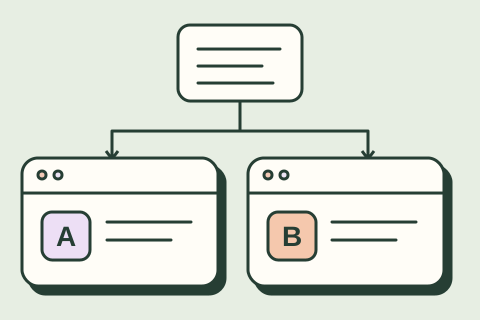
Copy the same sample into each tool. Keep the plan, settings and first result.

Check the work against the source. Count the fixes and the time they take.

Compare quality, total effort and cost. Save your evidence and next step.
Name the trigger, fields, destination and owner.
Handle missing fields before connecting live services.
Include duplicates and a deliberately failed destination.
Record usage, recovery, permissions and the stop control.
SYNTHETIC ROUTING CASES
A: ID demo-001, topic website, email test@example.com.
B: repeat ID demo-001.
C: ID demo-002, topic campaign, email missing.
D: ID demo-003, topic unknown.
Expected: A creates one review record; B is skipped; C and D enter an exception queue. Send no email and spend no money.
Product information reviewed November 11, 2026. Compare the documented differences below, then record your own results.
| Question | Tines | n8n | Make |
|---|---|---|---|
| Starting fit | Operational workflows with centralized access and oversight. | Node-based workflows with hosted or self-managed deployment choices. | Visual scenarios connecting supported business applications. |
| The real setup work | Map credentials, workspace roles, approvals and exception routes. | Map credentials, node behavior, runtime ownership and retry paths. | Map connections, data fields, filters and error handling. |
| Cost to compare | Edition and workflow allowances, plus any connected-service charges. | Execution/hosting plan, operations and connected AI usage. | Credit consumption per scenario and connected-service charges. |
| A useful review question | Who can change the workflow and who sees its data? | Who maintains and recovers the runtime you selected? | What happens when one operation fails after another succeeds? |
| Same acceptance check | One input ID creates one review record. | Retries do not duplicate a completed action. | Missing or unknown fields reach a visible exception queue. |
Start with draft-only output and synthetic records. Self-hosting adds operational responsibility; it does not automatically resolve every connected service’s data handling.
Valid input succeeds once; duplicate is skipped; missing/unknown fields are visible; a failed destination can be retried safely; a person approves outward-facing actions.
Use the same permitted input, record the account plan and date, and include your corrections in the total effort. Stop if the tool needs access you cannot authorize.
Get the printable scorecard ↓Plans, features and terms can change. Confirm the details you need before purchasing or connecting. Source references above link to official documentation.
View Tines ↗ View n8n ↗ View Make ↗